
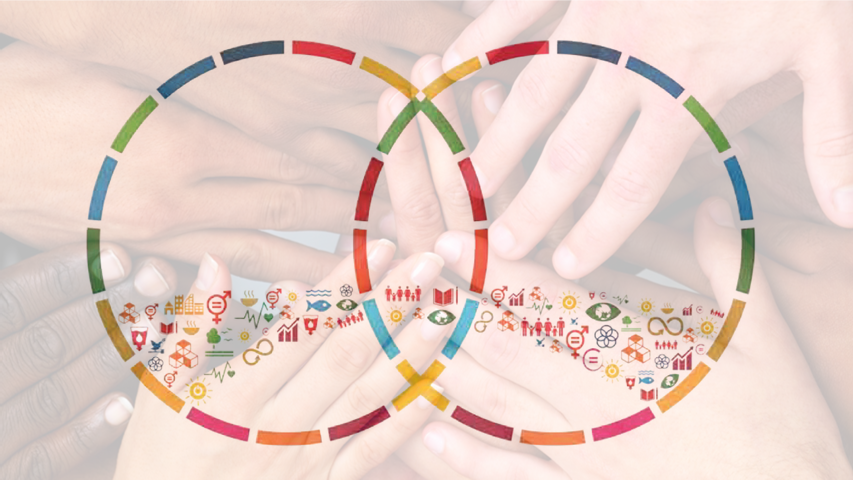
It is hard to believe that eight years have passed since global leaders agreed on the Sustainable Development Goals and Paris Climate Agreement. We’re midway to the 2030 deadline! At the big SDG stocktake in September, participants will find that we are off track. At the COP-28 Summit in November, they will find that progress on the climate front is not looking good either.
As SDG communicators, we know that international development co-operation can help get the world back on track. We also know that investing in co-operation requires strong public backing. But are development organisations making a strong enough case for their work?
Is the development co-operation narrative still fit for purpose?
Development organisations face a growing number of criticisms related to the way they present their work:
- Amaran Uthayakumar-Cumarasamy from Health Poverty Action argues that the language of “aid” and “charity” that portrays wealthy countries as saviours can undermine public support for international co-operation.
- Matthew Kertman, from the Center for Effective Global Action, argues that some language, narratives and frames reinforce neocolonial dynamics.
- Jean-Phillipe Thérien of the University of Montreal calls on narratives on global poverty to explain global power structures.
- Amitabh Behar, CEO at Oxfam India, argues that the international development sector will become irrelevant if it continues to be rooted in colonial frameworks.
- Malaka Gharib, Digital Editor of the Life Kit podcast, explains how an excessive focus on institutional visibility and logos can undermine public support for partner governments.
- Forus, a global civil society network, writes about a language and lexicon prototype using AI to enable more inclusive communication, using less colonial and pejorative language.
Finding better narratives on development co-operation can be tricky. Fortunately, there are lots of places to find ideas. At a Workshop earlier this year, we brought together members of the DevCom network with experts on South-South Co-operation (SSC). We found that decades-old SSC principles could inspire a very modern narrative on development co-operation.
| What is South-South Co-operation? |
|---|
| The United Nations (UN) defines South-South Cooperation (SSC) as “a common endeavour of peoples and countries of the South, born out of shared experiences and sympathies, based on their common objectives and solidarity, and guided by, inter alia, the principles of respect for national sovereignty and ownership, free from any conditionalities.” The concept emerged at the 1955 Bandung Conference, with countries from Asia and Africa setting up consultation and co-operation processes. In 1978, 138 countries endorsed the Buenos Aires Plan of Action and strengthened the UN Office for South-South Cooperation. More recently, global dialogue on SSC has been carried forward through High-Level Conferences in Nairobi in 2009 and Buenos Aires in 2019. |
What can communicators learn from the principles of South-South Co-operation?
Proponents of SSC contrast their form of co-operation with “traditional” co-operation conducted by the members of the OECD Development Assistance Committee (DAC). They place high value on national sovereignty and ownership, and on not interfering in the domestic affairs of partner countries. They also emphasise the need for mutual benefit: all partners are on equal footing and contribute to the partnership in many ways – not just through resources, but also through the sharing of experiences and the transfer of knowledge.
So how can these principles help development communicators frame powerful narratives about the work of their organisations? Here are 5 messages for communicators to consider, drawing on principles of South-South co-operation.
- “WE ARE ALL IN THE SAME BOAT”
We share the same challenges, and we have more in common than sets us apart. We all seek to achieve sustainable development. Since, we face similar problems, we also have experiences to share in solving them.


- “WE NEED EACH OTHER”
In a complex global economy and society, we are all interdependent. For one of us to advance, we must all advance. No one is safe until everyone is safe. To achieve our goals, we need global solidarity and multilateralism.


- “EVERYONE HAS SOMETHING TO GIVE”
Co-operation can take many forms. It can come in the form of funding, but also in the form of experiences, knowledge and skills, or ideas. All countries must be respected for the contributions they can make to the partnership.


- “ALL COUNTRIES HAVE AGENCY”
Historically, some countries have had more agency, voice and impact than others. Achieving sustainable development everywhere means accepting responsibilities and recognising imbalances. This was a major subject at COP-27 in 2022, where some countries agreed on a loss and damage fund to address the inequities of the climate crisis.


- “WE CAN INNOVATE TOGETHER”
Many SSC providers and DAC members have recognised the value of working together through so-called triangular (or trilateral) co-operation. Partners contribute in many different ways, and, aside from promoting development outcomes, they also build dialogue and mutual understanding.


Amid multiple global crises, conflicts and polarisation, it can feel like the world is drifting further apart. Yet, we development communicators have powerful messages about unity and joint action to share. Over the next year or two, several global summits will provide opportunities to share these messages: the SDG Summit in September, the COP-28 Summit in November, the 2024 Summit of the Future.
One campaign all development organisations can support is the Unite to Act by the SDG Action Campaign. Here is how you can support it:
- Share the video and messages on your social media platforms tagging @SDGAction and using #Act4SDGs
- Join the action on social media through the new unique digital tool: the ACTivator!
- Show your ribbon! Incorporate the ribbon element on your website, assets and photos.
- Organize a UNITE TO ACT stunt on 15 September.
We are halfway to 2030. Let’s get back on track and make a renewed case for international co-operation.
The ideas in this post were discussed at a DevCom Zooms In Session, organised in partnership with the Ministry of Foreign Affairs of Brazil in February 2023. The event brought together communications managers and policy expert from Brazil, India, Germany, Mexico, Spain and Portugal, and from multilateral organisations like SEGIB and the OECD.


Leave a Reply