
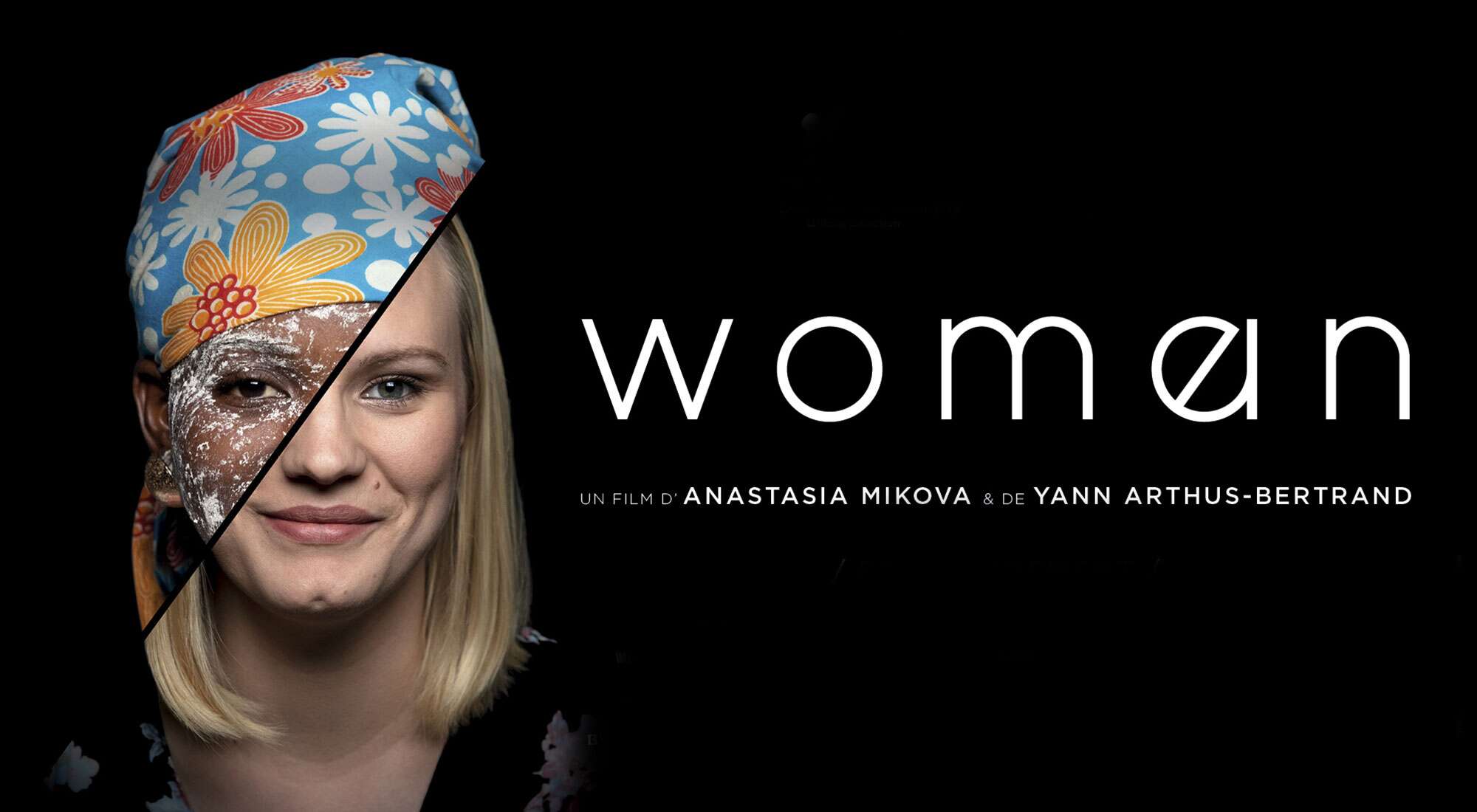
Are women’s lives improving? Woman, the 2020 film co-directed by Anastasia Mikova and Yann Arthus-Bertrand, is a snapshot of what it means to be a woman today. In it, women around the world share deeply personal stories, talking directly to the camera. In doing so, these women also tell us how well their countries are doing when it comes to gender equality.
We spoke to Mikova about what she learned in making the film, and what lessons her experience offers for development communicators. Read on for insights on trust-building, storytelling, and letting people speak for themselves – particularly when it comes to often-taboo subjects like gender-based violence.
Q: You interviewed some 2,000 women to make this extraordinary film. How were you able to gain access to communities that were often closed off? How can communicators build trust and encourage exchange?
AM: To gain access and trust, you need two things: time, and a safe space. They go together. You can’t just schedule an interview and show up and start asking intimate questions; it won’t feel like a safe space.
When we made Woman, we started planning every interview months in advance.
Before we went into a new community, we worked hard to make sure that everyone understood why we were making this project and what it was about. It was so important for us to connect with local fixers. People who were accepted in the community, who knew how the community worked and the important people to approach. Only once we had those relationships did we try to find individual voices for the film.
And then we would stay in once place for quite a while, really living in the places where we were shooting. Particularly with native communities, we would stay and create that link, create trust.
Q: What are the key elements of a powerful interview?
AM: A good interview is not about the questions. The most important thing is for the subject to forget it’s an interview. That’s when it starts to get interesting. Because when someone is constantly reminded that they are being interviewed, they can’t be intimate or personal. So we really tried to make the women forget we were shooting. But we could only do this after we had built a relationship and trust.
It should also be a give and take. Especially when discussing deeply personal topics, you must share something yourself. You can’t expect someone to open up if they are the only one being vulnerable. The other person has to feel that you are a human being, who – though you may be from a completely different country or culture – is also willing to share some element of their own experience and can feel you.
That’s the third point. A powerful interview is about emotion. You need a relationship based not only on words but on sharing something emotionally honest.
Of course it’s crucial to have numbers, to know the statistics. But nothing is more powerful than when someone looks into your eyes and tells you what she has gone through.
Q: How do you decide whose stories to tell? Who gets to be representative?
AM: That’s the most difficult question! When we finished shooting, we had 2,000 amazing stories on film. But then how do you choose and why would you privilege one story over another?
There are no perfect answers, but my recommendation is: take your time. It took us two months to cut a rough version of Woman from those 2,000 interviews. It was eight hours long. It took us another ten months to cut that.
In the end, we realised that while every story is unique, many resonated together. In some cases, hundreds of women shared a story on the same topic. So we started there, and decided to highlight the topics that came up the most.
For the final edit, we made sure we included women of different nationalities, ages – many different criteria. We didn’t want to have the same “kind” of women talking, but to find a balance where each woman could represent a larger shared experience.
At the same time, there were some topics that came up less frequently but that we took an editorial decision to highlight, such as genital mutilation and rape as weapon of war. We thought that if these things are still happening, we need to talk about them. And if even one woman had the courage to talk about it, we have to find the courage to listen. So it’s a mix of doing the homework and knowing the key issues across a larger group of people, but also honouring your priorities – whether as an individual filmmaker or as an organisation.
Whatever you do, be willing to make hard choices. The biggest mistake is to try and talk about everything, because then you wind up not talking about anything. If you keep the focus narrow and go deep, the result is much more powerful.
Ultimately, what we realised in making this film is how many topics are never discussed. Not just by men, but by women.
I think this is also a useful way to think about the value of a campaign. It builds momentum and gives people an opportunity to start a conversation about things that are rarely discussed.
Q: At the end of hearing each woman tell their stories, what did you want the audience to come away understanding or feeling?
AM: The answer is in the question: it’s about feeling. The point is not only for the public to come away understanding something with their brain, but for each woman’s story to have resonated emotionally – even physically.
That’s what we wanted people to experience when watching Woman. We wanted to convey the feeling of being in a woman’s body. This was important because we wanted the film to resonate not only with women but also with men. We wanted it to be a kind of dialogue, a door that half of humanity opens to the other half to tell them, “feel what happens inside.”
Music can be a great vehicle for this, too. That’s why one of my favourite campaigns [is an SDG campaign by Project Everyone that] featured girls around the world dancing to ‘Wannabe’ by the Spice Girls. I thought it was really smart because it used a song that so many people know. Pop culture can be a great way to share a message and make people really feel it.
Q: We’re seeing so much more media attention to gender issues, and GBV in particular. Do you think this is having an impact?
AM: We started filming before #MeToo, and in 2017 we saw a major shift everywhere we went. Women were ready to talk, and there was more opportunity in the media to make their voices heard. So it’s clear that media attention has had an impact.
But for many women we spoke to, the attention was beside the point. The most important thing for many wasn’t to wind up in the film, but to have us truly listen to their story. To feel that their story matters to someone.
To me the real question is: now what? How do we make sure those stories serve a purpose? What response will there be on a local or global level? Especially when we talk about something as damaging as GBV, it’s even more dangerous to ask women to share what they went through and have no answers for them about what we will do about it.
That’s the most important thing. As people who work on these issues, we have a responsibility not only to help people share their voices, but to contribute to solutions.
“Woman” is available to rent or purchase on several platforms, including YouTube.


Leave a Reply